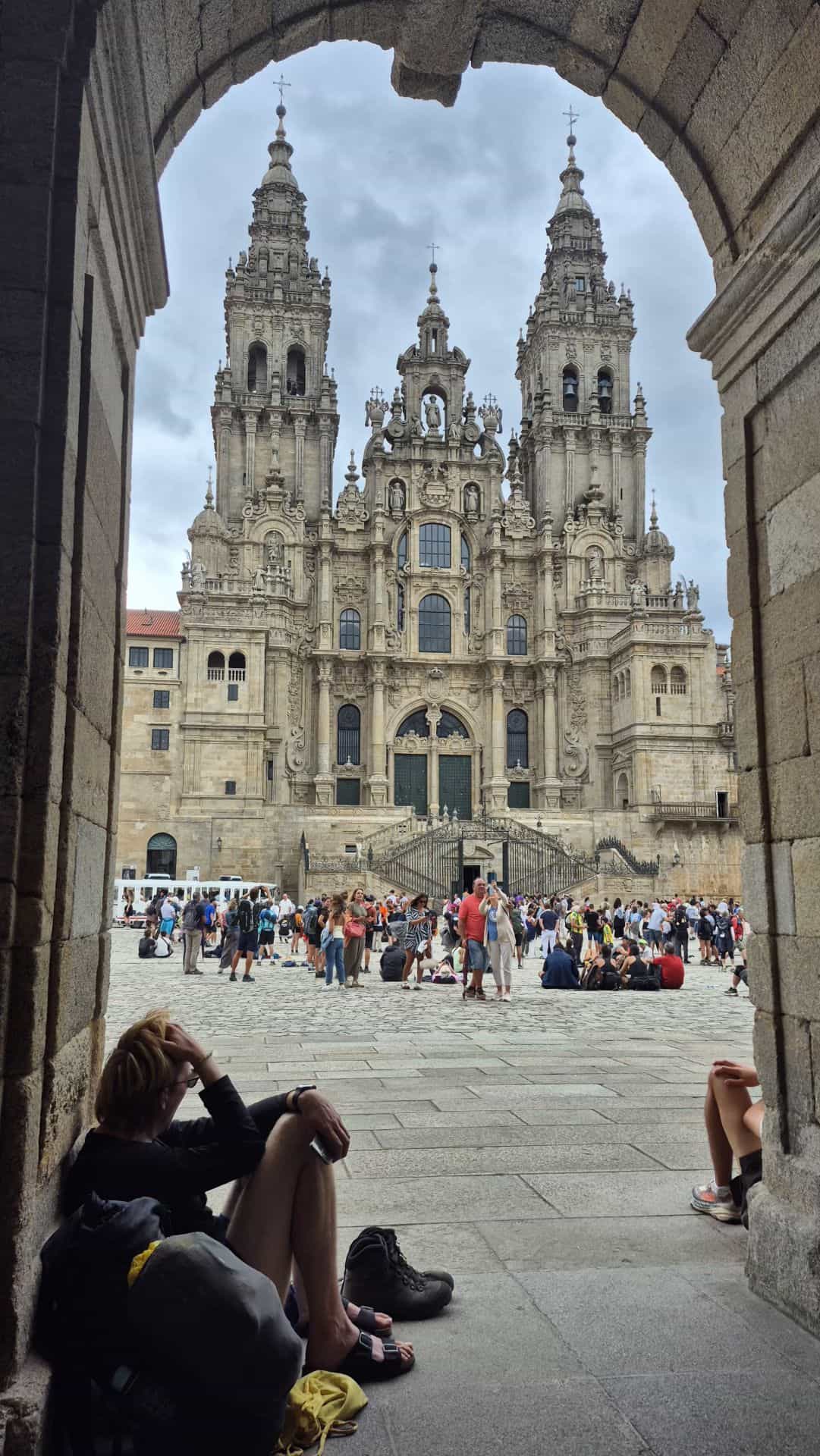
The Camino de Santiago gives you a striking variety: mountain passes, open plains, Atlantic cliffs, and green Galician hills. This guide focuses on the most scenic stretches on the Francés and Portuguese routes, with route links placed where they help you plan the next step.
At a glance:
- Cross the Pyrenees for high mountain views and a memorable first stage.
- Feel the scale of La Meseta on long, quiet tracks under a huge sky.
- Reach Finisterre for cliffs, sea light, and one of the most dramatic finishes on any Camino route.
- Walk the Portuguese coast for beaches, sea air, and steady ocean views.
- Leave the logistics to us, because we arrange hand-picked stays, breakfast, luggage transfers, and support.
Snaking its way to Santiago de Compostela along various routes, the Camino de Santiago encompasses countless memorable sights. From the Pyrenees and La Rioja to Galicia and the Atlantic coast, the scenery keeps changing and keeps the walk fresh.
Here are our picks for natural wonders on the Francés and Portuguese routes.
The Camino Francés
The Camino Francés gives you the widest scenery shift on the Camino, from mountain crossings and open plains to high viewpoints and the greener landscape of Galicia.
1. The Pyrenees – Gateway to the Camino
The Camino Francés begins with a formidable yet awe-inspiring challenge: crossing the Pyrenees from Saint-Jean-Pied-de-Port in France to Roncesvalles in Spain. It throws you straight into the deep end, but the reward is a mountain stage that feels unforgettable from the first climb.
This segment offers stunning mountain vistas, with trails winding through forests, pastures, and high-altitude meadows. The ascent provides panoramic views of the Pyrenees’ rugged terrain, with its diverse flora and fauna, offering a memorable start to the Camino.
Where to find it: Stage 1 Camino Francés
2. Alto del Perdón – The Hill of Forgiveness
Beyond Pamplona, walkers ascend the Alto del Perdón, where a modern sculpture of pilgrims brave the wind, symbolising the journey’s trials and triumphs. The summit offers a 360-degree view of the surrounding Navarre, with fields, wind turbines, and distant ridges laid out below.
It is not the longest climb on the Camino, but it is one of the clearest moments where the scale of the landscape really opens up.
Where to find it: Stage 1 Camino Francés
3. La Meseta – Spain’s Vast Heartland
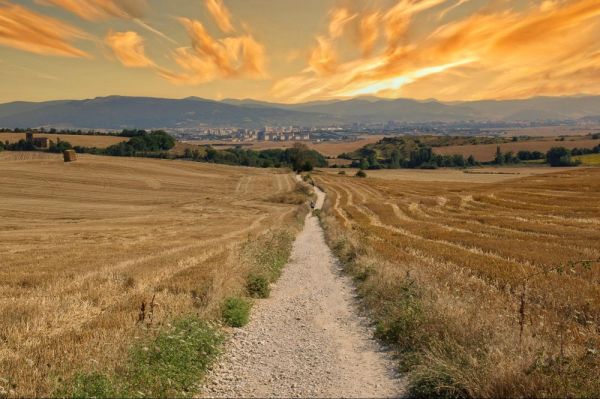
There are some people who refer to La Meseta as the ‘dull’ part of the Camino, but we’d beg to disagree. La Meseta, a high plateau in central Spain, presents a different kind of beauty. Its vast, open landscapes offer a stark, minimalist effect that is both meditative, surreal, and even a little foreboding. After the social buzz of Burgos, La Meseta is like walking across the moon.
The long, straight tracks under a huge sky give you room for reflection and a peaceful walk, with wheat fields and vineyards stretching towards the horizon. Walkers who want space, quiet, and a slower rhythm often remember this section long after the walk ends.
Where to find it: Camino Frances Stage 3
4. Cruz de Ferro – Camino Symbolism
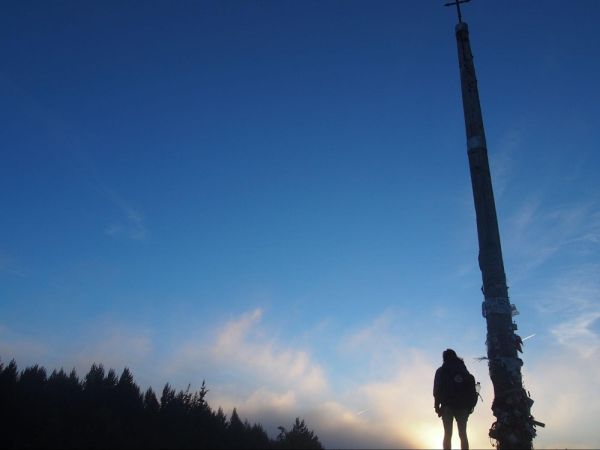
The Cruz de Ferro, or Iron Cross, stands as a poignant landmark on the Camino Francés route. This simple yet profoundly symbolic structure consists of a wooden pole topped with an iron cross, surrounded by a mound of stones that have been laid there by pilgrims over centuries.
At an altitude of approximately 1,500 metres, it marks one of the highest points on the Camino Francés, offering breathtaking views and a moment of deep reflection for those who pass by.
The natural beauty surrounding the Cruz de Ferro is as compelling as the landmark itself. The cross is nestled within the Montes de León, part of the larger Cantabrian Mountains that stretch across the northwest of Spain. An astonishing part of the Camino de Santiago landscape. Bring a stone from home, and leave your mark on this historic walk.
Where to find it: Camino Frances Stage 5
5. O Cebreiro – A Village Above the Clouds
Entering Galicia, pilgrims encounter O Cebreiro, a traditional Galician village perched high in the mountains. This area is known for its pallozas (stone and thatch houses) and its often misty, ghostly atmosphere. The surrounding landscape, with rolling hills and lush greenery, marks a striking contrast to La Meseta and, at times, looks remarkably like Ireland.
If that greener, older pilgrim atmosphere appeals, the Celtic Camino offers a shorter route with a similar sense of heritage closer to home. On the Francés, O Cebreiro marks one of the clearest scenery shifts on the whole walk.
Where to find it: Camino Francés Stage 5
6. Finisterre – The End of the World
For those who continue past Santiago, one of the Camino’s great natural wonders awaits. The small town of Finisterre lies 91km west of Santiago and is connected via the Camino Finisterre, a Camino offshoot for those looking to escape the business of Santiago and end their Camino at a place the Romans once considered the end of the world.
It works especially well after time in Santiago, so if you want ideas before heading on, see our guide to places to visit in Santiago de Compostela.
Above the Atlantic, the cliffs and sea light do the rest. Cape Finisterre feels exposed, spacious, and unforgettable, especially in late afternoon when the light drops across the water and the headland. If you want a finish shaped by nature rather than crowds, this is hard to beat.
Where to find it: Camino Finisterre
The Camino Portugués
The Camino Portugués has a softer coastal feel, with sea views, river crossings, old towns, and calmer stretches that suit walkers who want scenic variety without the same mountain drama.
1. The Coastal Route – Along the Atlantic
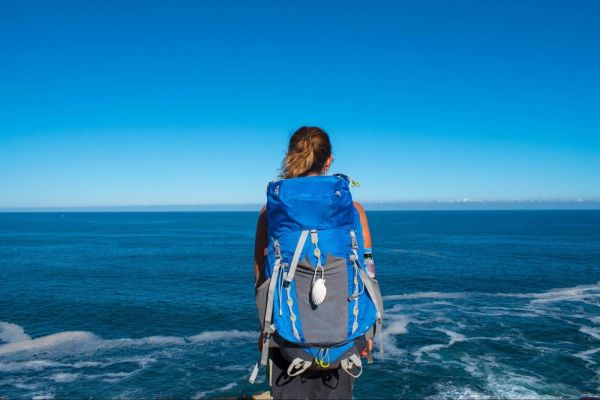
The northern section of the Camino Portugués stays close to the ocean for long stretches, which is why it appeals to so many pilgrims walking in Portugal.
You’ll often find yourself just staring out to sea while walking – there’s something deeply peaceful, almost mesmerising, about walking next to water for long periods.
With a refreshing sea breeze, the sound of waves, and the sight of pristine beaches and rugged cliffs, it’s hard to go wrong in this part of the world.
Where to find it: Stage 1 Camino Portugués and Stage 2 Camino Portugués

2. Ponte de Lima – Ancient Crossings and Riverside Beauty
Ponte de Lima, one of Portugal’s oldest towns, is renowned for its Romanesque bridge spanning the tranquil Lima River.
The surrounding area, with its lush riverbanks and traditional vineyards, provides a picturesque setting that highlights the region’s natural and historical heritage.
This is an area where it feels like life has been slowed down. People don’t rush, and lunches take longer – life has a different pace.
Where to find it: Camino Portuguese Stage 1
3. Rivers and Rias – Welcome to Galicia
Upon reaching Valença do Minho, walkers find themselves at a fortified town on the border with Spain, overlooking the Minho River. As you make your way North, you’ll eventually cross a series of estuaries – or Rias, as they call them in Galicia.
These rías are one reason many walkers look for Camino route recommendations for different interests before booking. If you like water views without the bigger climbs, this part of the Portugués makes a strong case for itself.
Where to find it: Camino Portuguese Stage 2
Other Camino Highlights Along the Way
Not every memorable stop on the Camino is a natural wonder. A few places stay with walkers because they break up the route in a different way and give you a stronger sense of the road’s character.
Bodegas Irache – The Wine Fountain
Just outside Estella, the Monastery of Irache has welcomed pilgrims for centuries, but it is the free wine fountain set into the monastery wall that stops walkers in their tracks today.
Bodegas Irache, the winery that operates the fountain, has kept the taps flowing for decades as a gift to those passing through. You fill your cup, raise it to the road ahead, and carry on.
It is one of the most unusual and warmly remembered stops on the entire Camino Francés, tucked into a landscape of vineyards and ancient stone that feels completely removed from the modern world.
Where to find it: Between Estella and Los Arcos, Camino Francés
Ponferrada – The Templar Castle
Descending from the Cruz de Ferro, the Camino Francés leads into Ponferrada, a town that announces itself with one of the most striking medieval structures on the entire route.
The Castillo de los Templarios, built by the Knights Templar in the twelfth century, rises from a rocky outcrop above the confluence of two rivers, with the mountains of El Bierzo filling the skyline behind it.
The scale of the fortress is genuinely impressive, and the setting makes it one of the most photographed sights on the Camino. Even if you pass through quickly, the castle is impossible to miss and hard to forget.
Where to find it: Camino Frances Stage 5
Which Camino Route is the Most Scenic?
Each Camino route has its own visual character, and the answer depends on what kind of scenery moves you most.
The Camino Francés offers the greatest variety, taking you from the high drama of the Pyrenees through the wide silence of La Meseta and into the green hills of Galicia. No two days look the same, and that contrast is a large part of its appeal.
If you want sea views for much of the walk, the Camino Portugués Coastal Route is the better fit. The terrain is gentler overall, and the ocean stays part of the experience for long stretches.
What the Camino’s Scenery Does to You
The strongest Camino scenery stays with you because it changes how you pay attention. One hour, you are on an exposed ridge. Later, you are walking through mist, vineyards, or cliffs above the Atlantic.
That shift is a large part of the appeal. With hotels, breakfast, luggage transfers, and support handled by us, you have more space to enjoy what is around you. See our Camino de Santiago walking holidays.