Preventing blisters on the Camino requires well-worn footwear and dry feet. This guide explains how to avoid blisters on the Camino by choosing comfortable shoes, wearing moisture-wicking socks, and treating hot spots as soon as they appear.
What to know:
- Wear seamless, moisture-wicking socks to reduce friction on hard asphalt sections of the trail.
- Treat hot spots early with blister tape, moleskin, or sterile dressings before they worsen.
- Enjoy a lighter walk because we arrange hotels with breakfast, daily luggage transfers, and emergency support.
- Break in your shoes and build up your walking mileage weeks before arriving in Spain.
- Keep your feet dry by changing damp socks and letting them air out on your backpack.
The dreaded B word is something everybody fears on the Camino. A small rub can turn a good walking day into a painful one, especially when every kilometre feels longer than it should.
Blisters are painful, but early action can stop them from taking over your walk. Here are some practical ways to prevent and treat blisters on the Camino.
Select the Best Shoes for the Camino
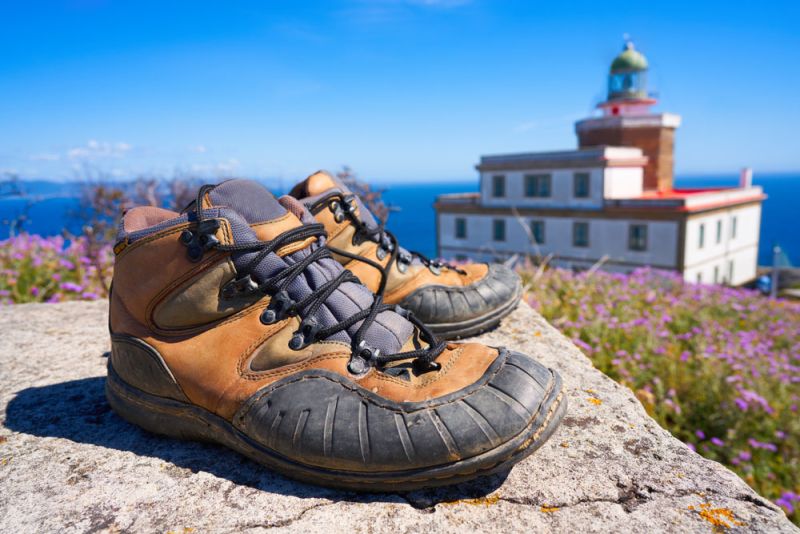
The hiking shoes vs. boots debate will likely continue long after we’re gone because there’s no single right answer. This comes down to a personal preference, but there are a few things you need to keep in mind.
The Camino isn’t the most strenuous of walks. While there are certainly some ups and downs, you don’t really need to arrive with boots that wouldn’t look out of place on an Arctic expedition.
Trainers, Boots or Trail Shoes
Many people do the Camino in good quality trainers and are just fine, while some prefer the added ankle support and weight that come with a good pair of hiking boots.
The best shoes for the Camino are the pair that fit securely without pinching. Whatever you choose, make sure there’s enough room to move your toes a little but still tight enough so your feet aren’t sliding back and forth.
Some walkers also bring a trail running shoe or hiking sandal as a second pair to give their feet a break on easier sections.
Break in Your Shoes and Socks
If there is one rule worth keeping, it is not to arrive on the Camino with a pair of brand-new hiking shoes or boots you’ve never worn before.
Shoes, and to a lesser degree, hiking socks, need to be well–worn before using them for a sustained period. Breaking them in allows the material to stretch slightly, which is essential for blister prevention.
Training for the Camino also gives you time to test your footwear across longer walks before you arrive in Spain.
Build Mileage Before the Camino
Footwear is designed to be worn immediately after purchase, but to get to maximum comfort (where you want to be just before arriving on the Camino), it needs to be put through some mileage first.
There’s no set distance you need to achieve before arriving on the Camino. If you have walked the 25 km along the Celtic Camino in Ireland, you already know how important comfortable footwear feels after a few hours. Try to get a new pair of shoes or boots around a month before leaving, and each week, slowly build up the distances.
Avoid doing too much too soon. Gradual training gives your feet time to adapt to the new shoes and build confidence for longer Camino days.
Condition Your Feet
Short barefoot time at home can help some walkers build foot awareness, but only do this on safe indoor surfaces and stop if it feels uncomfortable. Trim your toenails before you travel so they do not press against the front of your shoes on downhill sections.
What Socks Work Best for the Camino
You often get blisters because the sweat coming off your feet has nowhere to escape. It pools at the bottom of your sock, creating friction against the skin.
Keeping your feet dry is essential, and one of the best ways to prevent painful blisters is by using moisture-wicking socks.
Moisture-Wicking Materials
- Moisture-wicking socks pull the moisture away from the skin so it can evaporate.
- Polyester and Merino wool are among the best materials for moisture-wicking socks.
- Cotton holds moisture against your skin, which can increase friction.
- It is worth buying high-quality hiking socks before your Camino, then testing them on training walks.
Seamless and Double-Layer Options
Seamless socks, including double-layer and liner sock options, are also worth considering as they reduce friction points that can lead to blisters.
Typical Scenario: Managing Foot Friction on Long Camino Days
You have trained before arriving in Spain, and your shoes feel comfortable in the morning. A few hours later, a warm asphalt stretch starts to change things. Your socks feel damp. Your heel starts to rub. That small hot spot is your cue to stop.
To stop a blister from ruining your progress, you take immediate action:
- Stop walking early and listen to your feet.
- Swap your damp socks for a fresh pair of seamless, moisture-wicking socks.
- Apply blister tape, moleskin, or a Compeed patch to protect the irritated skin.
- Elevate your feet for a few minutes to rest and refresh before continuing.

Keep Your Feet Dry
Blisters thrive in wet environments, so keeping your feet as dry as possible helps prevent irritation. This is especially true on sections with asphalt, concrete, or gravel, where heat and hard surfaces increase friction.
If you are choosing dates around weather and heat, our guide to the best time to walk the Camino can help you plan with foot comfort in mind.
You do not need to change your socks every hour. Changing socks once during the stage can make a huge difference.
If your socks are damp, consider using two pegs to attach them to your backpack while you’re walking. You’ll be amazed at how effective this simple air-drying method is. At the end of the day, take time to elevate your feet and bathe them in cool water to help them recover.
Use Vaseline and Powder for Protection
Foot powder and Vaseline will not suit every walker, but both can help when used carefully. Talcum powder can be a great way to dry your feet and is often used by ultra-marathon runners.
Vaseline on your feet can reduce friction in high-rub areas, such as heels, toes, or the side of the foot. Use a small amount first because too much can feel sticky inside your sock.
How to Treat Blisters on the Camino
Listening to your feet is one of the most useful Camino de Santiago tips for avoiding a small rub turning into a bigger problem. At the first sign of slight discomfort, warmth, or rubbing, stop and address the issue before it worsens.
Sometimes, even with the best preparation, blisters or hotspots still appear. If that’s the case, here are your options:
1. Compeed Blister Patches
Compeed patches have long been the go-to for long-distance walkers with blister troubles. They’re easy to apply and protect the affected area from further damage.
You can then leave it on for several days, and when you take it off, the blister should either heal or drain on its own.
While they don’t prevent the blisters themselves, a few Compeed plasters are a must-have for those who want to enjoy the Camino despite any setbacks.
2. Taping
Blister tape or moleskin can be applied to hot spots where blisters might form. Again, this won’t prevent the blister, but it can protect a suspected area for long enough.
3. Do Not Burst a Blister
Try not to burst a blister unless pain makes walking difficult. Unbroken skin helps protect against infection, so cover the area with a plaster, moleskin, or sterile dressing and keep pressure off it where possible.
Mayo Clinic’s blister first aid guidance advises draining only when needed for pain, while leaving the skin over the blister in place.
If you do need to drain it, wash your hands, clean the blister, use a sterile needle near the edge, let the fluid drain, then apply petroleum jelly or antiseptic and cover it with a clean non-stick dressing. Check it each day for signs of infection, including spreading redness, warmth, pus, or increasing pain.
When to Get Medical Advice
Take extra care and seek medical advice if you have diabetes, poor circulation, immune concerns, or any sign of infection.
On the Camino, small foot problems can grow quickly because you are walking day after day. Clean care and early rest give you the best chance of keeping the next stage manageable.

Keep Your Feet Comfortable on the Camino with U Walk
Preventing blisters on the Camino starts with a good pair of shoes that give your feet the comfort they need for the long walk ahead. Small adjustments like drying your socks and using protective products help, but if blisters appear, knowing how to treat them will keep you safe, healthy, and moving.
As a 100% Irish-owned walking holiday operator, U Walk makes the Camino feel manageable because we look after the details: hotels with breakfast, daily luggage transfers, and emergency support while you walk. See our Camino walking tours and talk to our team when you are ready to plan your route.