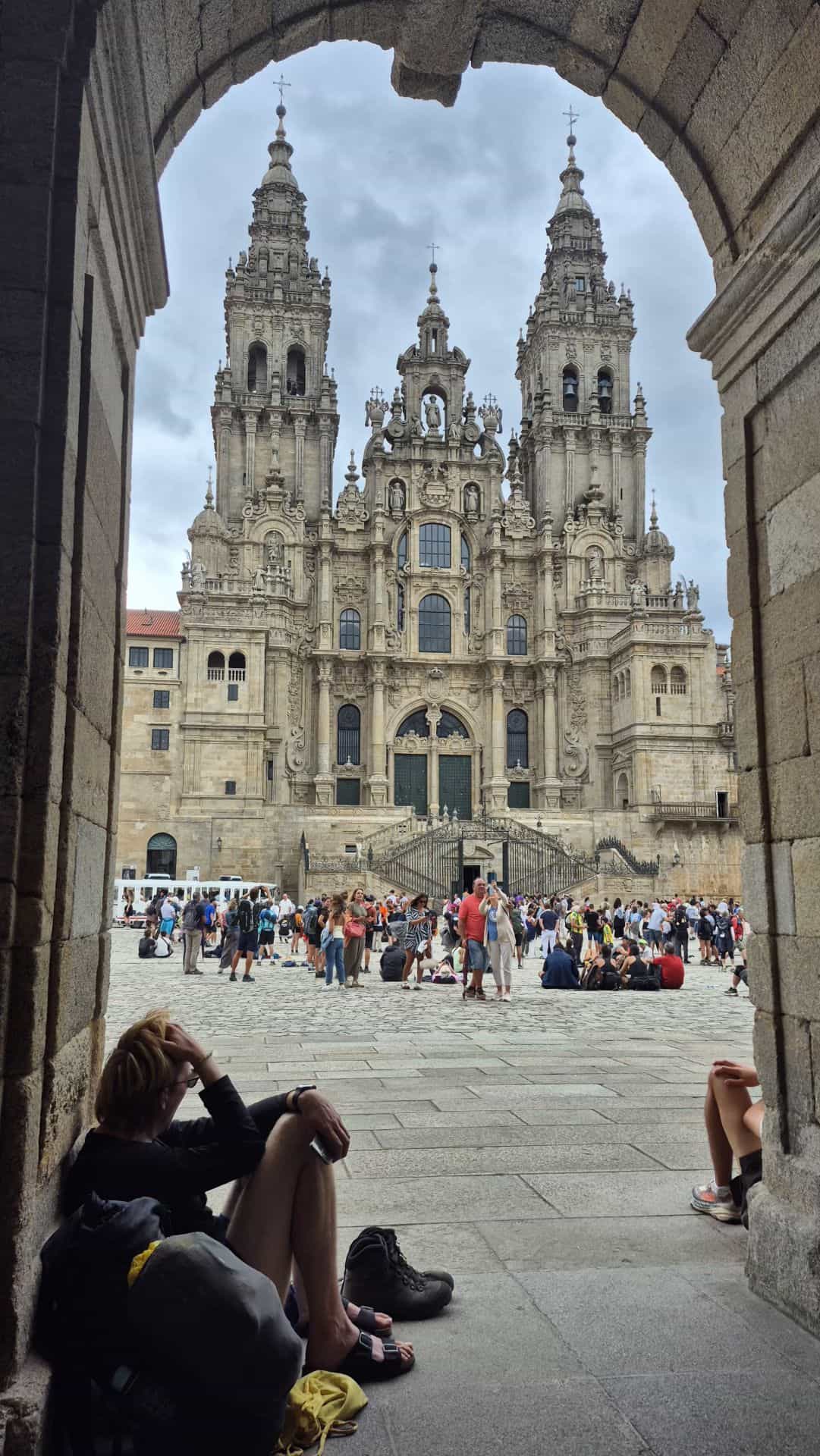
Walking the Camino de Santiago might not seem overly challenging because of its relatively easy routes and well-marked paths. Walking between 20 and 30 km daily for a week or more is no mean feat and shouldn’t be underestimated. The Camino route requires walkers to put in high numbers day after day, occasionally with gradients that can test even the strongest of knees.
Proper training is essential for walking the Camino, even for those considering it a less strenuous pilgrimage. Between 5% and 10% of walkers drop out, with injuries being the most common cause. Shin splints, blisters, back pain, and pulled muscles – you name it- can all be found along the Camino de Santiago.
While no amount of training can completely prevent accidents or injuries, the right level of preparation, both physically and mentally, can give you the best possible chance of staying fit and healthy on the Camino.
How fit are you for the Camino?
Before planning to walk the Camino de Santiago, it’s important to be honest with yourself regarding your own level of fitness. Walking 10,000 steps a day might feel like an achievement, but it doesn’t necessarily prepare your body for the Camino. For a more detailed approach to preparing your body, check out our Camino preparation guide.
Reevaluating step counts
Counting steps is a common way to track activity, but it can be misleading for a more rigorous physical challenge. Walking 10,000 steps is equal to around 8 kilometres or 1.5 hours.
While that is undoubtedly a decent daily effort, you’ll need to handle at least double that before starting the Camino de Santiago.
Adjusting to backpack strain
Another factor that people often don’t consider is that you usually carry a backpack for the entire day. Even a small day pack adds a strain to your body that you don’t often experience.
Before you begin your training, strap on a light backpack and head out for a 5 km walk. Gradually increase to 10 km as you build stamina and adjust to the added weight.
Focusing on steady progress
Often, people try to advance too quickly when they’re amazed at their initial progress, but this overconfidence can sometimes lead to problems.
If you can, plan for the Camino well ahead and take your time with the training – you won’t regret it. Remember, steady preparation is the key to a comfortable and enjoyable Camino experience.

How to prepare your shoes for the Camino
The golden rule for walking—especially on the Camino—is not to start with shoes that haven’t been fully worn in.
Break in your shoes early
While it might be tempting to turn up in Spain with gleaming new hiking shoes, you’re playing with fire if you haven’t used them to the point that they always feel comfortable.
It can sometimes take weeks to break in a pair of shoes properly, and that period can sometimes be difficult and even painful. Now imagine having to do it on the Camino de Santiago routes.
Choose the right footwear for long walks
Even the trusted old trainers you’ve had for ten years that are always a cosy fit might not provide the level of protection and support needed for walking day after day.
Give yourself plenty of time to break in your shoes before the Camino. Proper preparation ensures comfort and helps avoid blisters and discomfort along the journey.
Consider these essential tips, especially when families are walking the Camino de Santiago with kids.

How to build your Camino training program
Your training schedule will entirely depend on your fitness level. To increase your kilometres before arriving in Spain, it’s vital to do it gradually to allow your body to get accustomed.
A 12-week program is often recommended for the Camino journey. This timeframe gives you just enough time to acclimate your body without the intense training regimen required for a marathon.
Walking frequency and routine
Most training schedules require three walking days each week – say, Tuesday and Thursday for shorter periods and a longer session on the weekend.
As the weeks progress, you must begin practising on more challenging gradients. It’s all good, walking for 25 km on flat ground, but try 5 km in the mountains, and you’ll really know where you stand.
Strength training for walkers
It’s also a good idea to mix in some general strength training to your regimen to target muscles that will be used extensively during the Camino. This can be done at the gym or simply at home. You can read more about strength training for walkers here:

Group 1: Weeks 1-3
Take things easy in your first few weeks and do most of your training walks on flat ground.
| Week | Tuesday | Thursday | Saturday |
|---|---|---|---|
| 1 | 30 mins | 30 mins | 1 hour |
| 2 | 45 mins | 45 mins | 2 hours |
| 3 | 45 mins | 45 mins | 3 hours |
Group 2: Weeks 4-6
In the second group, try to introduce some hill training here and there.
| Week | Tuesday | Thursday | Saturday |
|---|---|---|---|
| 4 | 1 hour | 1 hour | 3 hours |
| 5 | 1 hour | 1 hour | 4 hours |
| 6 | 1 hour | 1 hour | 5 hours |
Group 3: Weeks 7-9
In group 3, it’s a good idea to begin walking on some steep hills. Don’t overdo it, and if you feel that your body isn’t ready, simply dial it back.
| Week | Tuesday | Thursday | Saturday |
|---|---|---|---|
| 7 | 1-2 hours | 1-2 hours/Strength training | 5 hours |
| 8 | 1-2 hours | 1-2 hours/Strength training | 4 hours |
| 9 | 1-2 hours | 1-2 hours/Strength training | 5 hours |
Group 4: Weeks 10-12
During the final group, you should try to mimic walking on the Camino by mixing different types of terrains into your weekend walk.
There’s no need to go crazy and start running up hills every day, but the body needs to know what it feels like to do a steep hill followed by a steep downhill.
| Week | Tuesday | Thursday | Saturday |
|---|---|---|---|
| 10 | 1-2 hours | 1-2 hours/Strength training | 6 hours |
| 11 | 1-2 hours | 1-2 hours/Strength training | 6 hours |
| 12 | 1-2 hours | 1-2 hours/Strength training | 6 hours |
What to do if you get injured?
In many ways, it’s better to get injured while training than on the Camino trip itself. The human body can break down from time to time, even with the best preparation.
If you get injured during a training period, either completely stop if it’s very bad or simply scale back your training to where you feel comfortable.
For those walking the Camino over 60, consult our tips to learn how to prepare during training and the walk itself safely.

Why is mental training for the Camino important?
One aspect of training that is frequently overlooked is the mental preparation often required for physical exertions like walking the Camino pilgrimage. While it may not require the same intensity as a marathon, walking for several days on the Camino can take its toll on anybody.
Facing the mental challenge
Mental training is perhaps even harder than physical preparation because you never really know how you’ll react until you’re in the thick of it. It’s not always easy. Long days in a hot, dusty landscape, unfamiliar surroundings, and a language barrier can lead to moments when you want to quit.
The best way to prepare mentally is to know what to expect. Research the routes, terrain, and gradients. Familiarise yourself with the challenges ahead, and check out our helpful blogs on Best Time to Walk the Camino, Spanish Phrases, Camino Stamps & Certificates, and more.
If you have concerns or queries, reach out to our expert team at UWalk on 0818 333 990. We’ll be happy to talk you through any doubts you might have.

Prepare to Step Up – Your Camino Journey Starts Now
Proper preparation transforms a challenging trek into a rewarding adventure. Whether you’re building endurance, breaking in shoes, or boosting mental resilience, UWalk’s expertly planned Camino walking tours ensure you’re supported every step of the way.