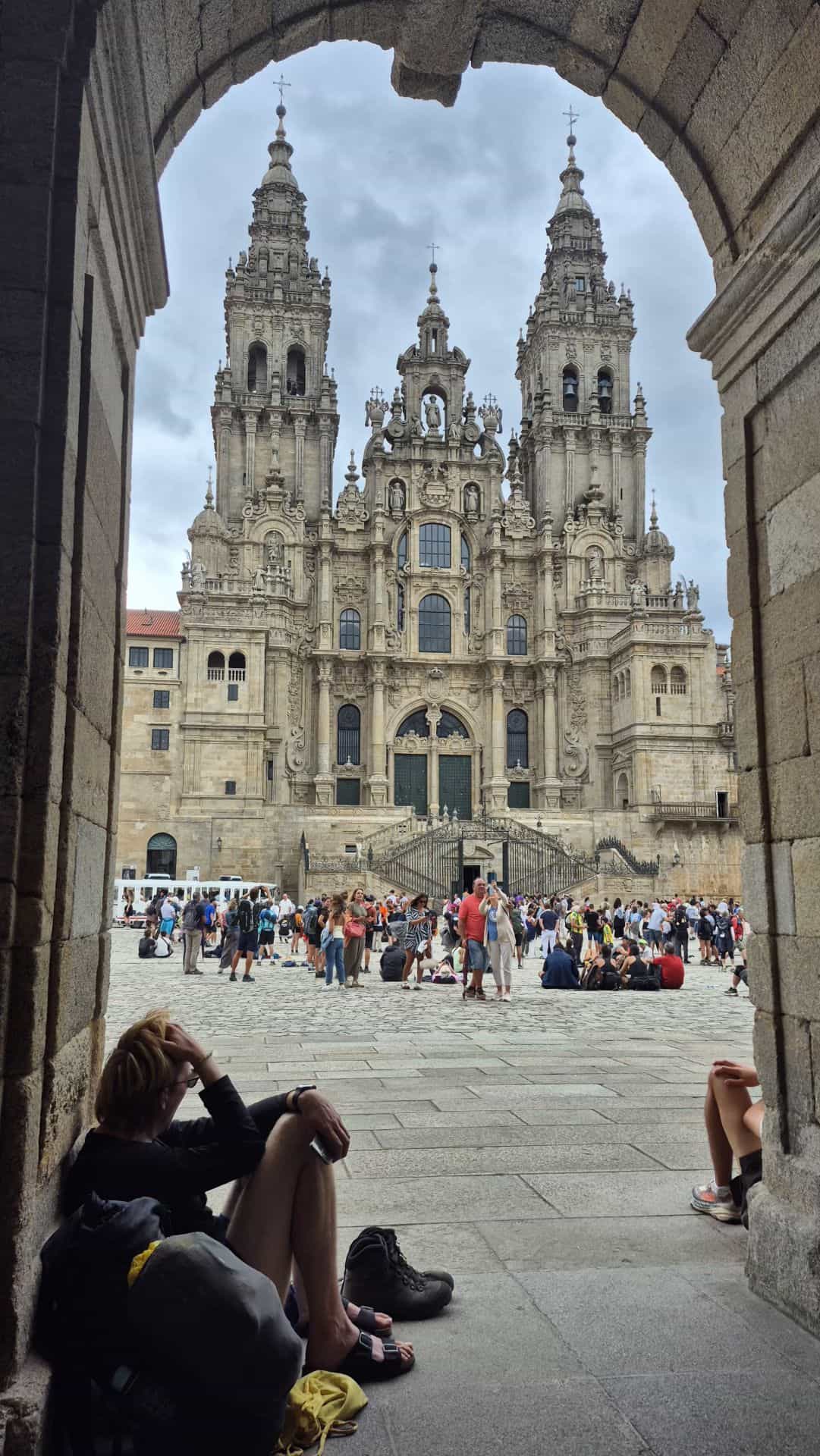
Galician, also known as Galego, is a co-official language in Galicia alongside Spanish and is closely related to Portuguese. Learning a few local phrases can help you read signs, order at cafés, and enjoy more day-to-day moments on the Camino.
In this article:
- Learn simple Galician greetings, questions, and café phrases you can use on the Camino.
- See common signage words that appear in towns and villages across Galicia.
- Understand why place names such as Fisterra may look different from older Spanish spellings.
- Pick up a few phrases for introductions, dietary needs, and asking for help.
What Is the Galician Language?
Galician is a European language and a co-official language in Galicia, alongside Spanish. Also known as Galego, it is closely related to Portuguese and is widely spoken in the regions and villages along the Camino de Santiago.
We’ll get the main worry out of the way first. What if you’re going to Galicia and are terrified that your Spanish won’t be useful? Don’t worry, if you already know some Spanish, that can still help in Galicia, where Galician and Spanish are both used in daily life.
But learning a little of the language can help you connect with locals, establish friendships, and most importantly, read menus! U Walk has put together this simple phrase guide to help you get started.
The Camino de Santiago also forms part of a wider cultural landscape recognised by UNESCO, which gives extra context to the history and identity you will notice in Galicia.
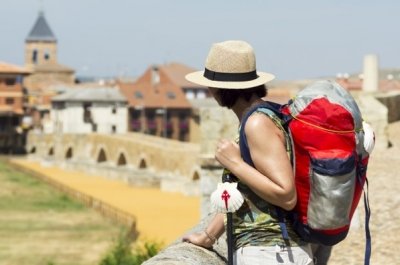
Greetings
Learning a few Galician greetings, along with Camino etiquette basics, makes it easier to communicate with locals on the route.
Whether you’re stopping at your accommodation, ordering food, or passing fellow pilgrims on the trail, these simple phrases help you connect and show appreciation for Galician culture. They are:
- Ola = Hi
- Bos días = Good morning
- Boas tardes = Good afternoon
- Boas noites = Good night
- Ata logo/ata loguiño = See you later
- Ata mañá = See you tomorrow
- Chau = Bye
- Adeus = Goodbye
- Si = Yes
- Non = No

Reading Signs Along the Way
As you walk through Galician towns and villages, you’ll notice that street signs and public buildings are labelled in Galician rather than Spanish. Here are some common Galician words you’ll encounter on signage along the route:
Common Signage Words
- Rúa = Street
- Praza = Square
- Igrexa = Church
- Mosteiro = Monastery
- Concello = Town Hall
Why Town Names Look Different
You may also notice that some town names look different on signs than they do in older guidebooks or apps. In Galicia, place names are officially used in their Galician form, so you may see Fisterra on signs where older Spanish references say Finisterre.
Basic Questions
If you already know some Spanish phrases for the Camino, these basic Galician questions can help when asking for directions on the Camino routes.
They can also help you build rapport with a local when striking up a friendly chat. Some of the most common questions are:
- Como estás? = How are you?
- Moi ben, e ti? = Fine, and you?
- Como te chamas? = What’s your name?
- Chámome… = My name is…
Introducing Yourself in Galician
Once you know someone’s name, these phrases help you share a little about yourself:
- Eu son… = I am…
- Veño de… = I come from…
- Encantado/Encantada = Pleased to meet you
- Por favor = Please
- Grazas/graciñas = Thank you
- De nada = You’re welcome
- Síntoo = I’m sorry
- Desculpa = Excuse me (trying to get attention)
- Que hora é? = What time is it?

At a Café or Bar
A well-earned break calls for good food and drink. These phrases can help you order like a local in cafés and bars along the Camino, and they pair well with our wider Camino de Santiago travel tips.
Whether in a busy town or a quiet village, knowing how to ask in Galician is always helpful. They are:
- Posme un café, por favor = Can I have a cup of coffee, please?
- Quería… = I’d like…
- Está riquiño = It’s really good
- A conta, por favor = The check, please
- Cóbrasme? = What do I owe you?
- Onde están os servizos? = Where’s the toilet?
- Homes = Men
- Mulleres = Women
- Está aberto = It’s open
- Está pechado = It’s closed
- Son vexetariano/vexetariana = I am vegetarian
- Son alérxico/alérgica a… = I am allergic to…
- Alguén fala inglés? = Does anyone speak English?
Plan Your Camino with U Walk
Speaking a few words of Galician adds to the experience of walking the Camino de Santiago. Using these simple phrases will help when ordering at a café, asking for directions, or chatting with locals.
Ready to plan your journey? Talk to our team about a Camino walking holiday. U Walk offers guided walks and tours, as well as self-guided walking tours, with hand-picked hotels, breakfast, luggage transfers, and support from our team along the way.
For official Camino information, you can also check the Pilgrim’s Reception Office.