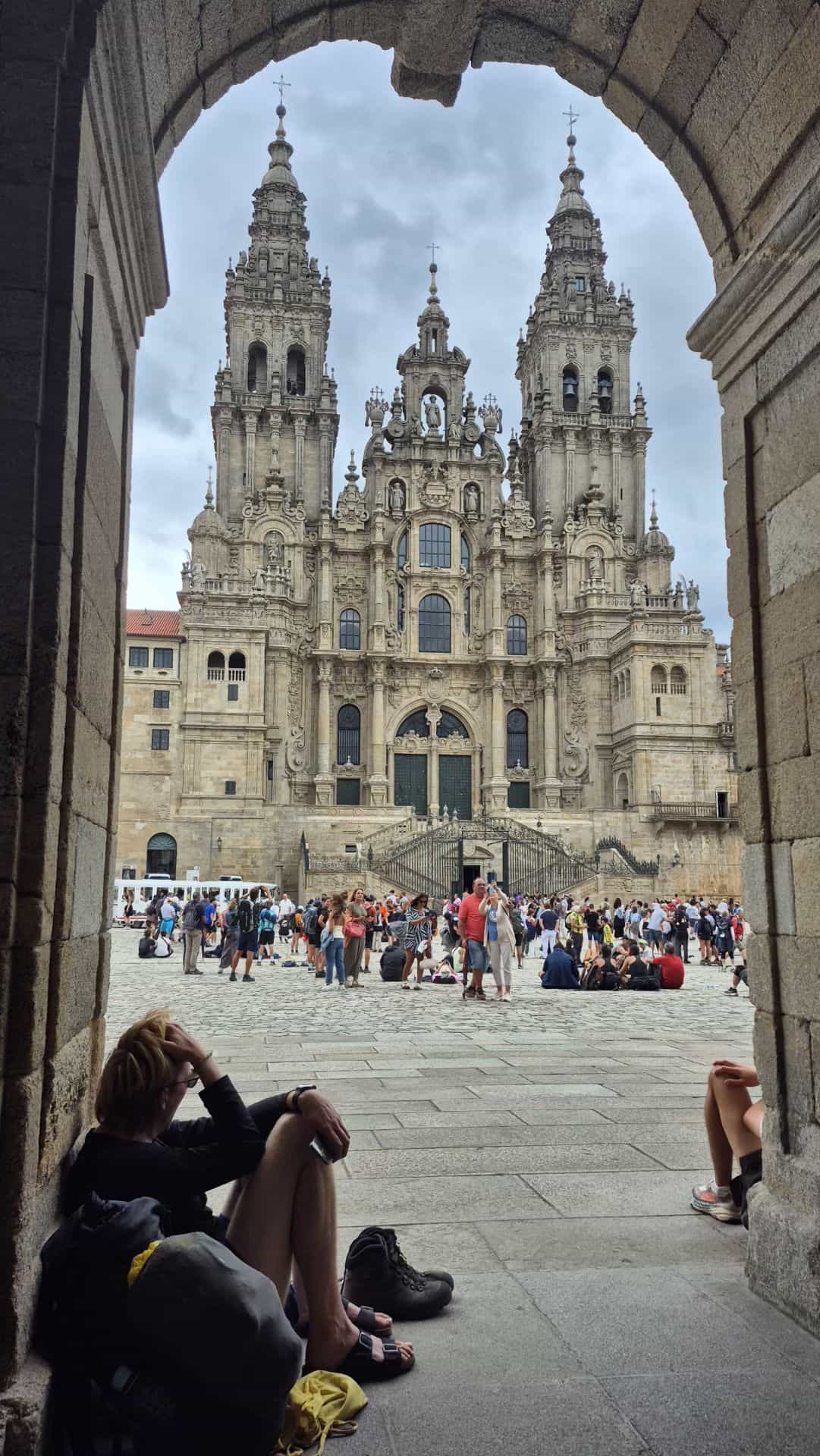
The Camino is much more than a spiritual walk, it is often described as a feast worth enjoying. In many of the towns and villages, pilgrims will find an incredibly diverse and vibrant food scene filled with local produce and regional dishes, including Galician specialties as you approach Santiago.
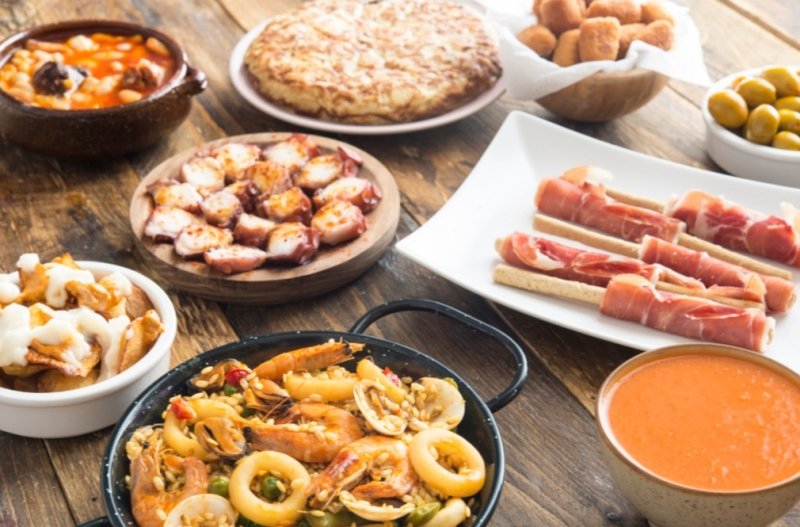
The Camino routine generally involves a morning stop for coffee, a lunch stop, and perhaps an afternoon beer or wine break and late dinner. Many people say that Santiago de Compostela might just be one of the best cities to eat in. From breakfast pastries to traditional tapas, market-stall treats and more modern eats, Santiago has places to eat at a range of prices.
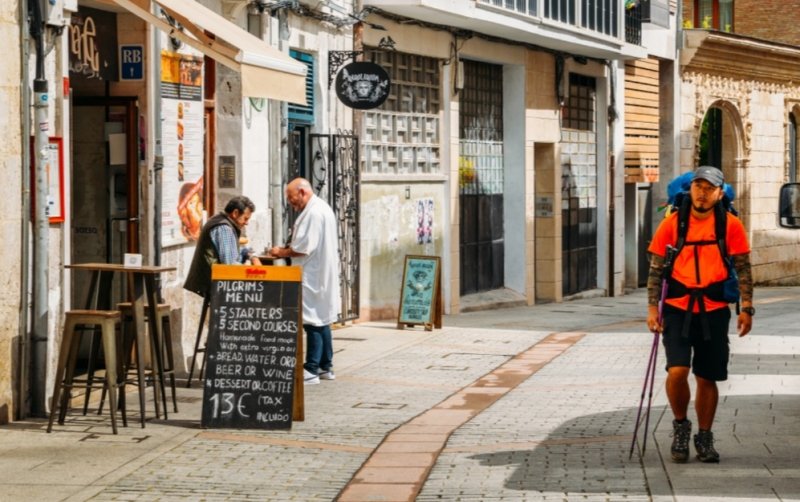
When you are walking along the Camino, you may come across restaurants offering the “Menú del Peregrino” (pilgrim menu). This set-price meal may include a starter, main and dessert, but courses, bread and drinks vary. Check what is included before ordering, since prices also differ between venues and towns.
When and How to Eat on the Camino
Meal times in Spain run later than at home, which can catch you out after a long walk. Restaurants commonly serve lunch from around 1 pm to 4 pm and dinner from about 8 pm, although some Camino venues serve walkers earlier. Opening hours vary, particularly in smaller villages and outside the busiest months, so check before relying on a stop.
- Breakfast – Included at your hotel on our trips, so you can set off fed. A coffee and a slice of toast or a pastry at a café a few kilometres in is part of the Camino routine.
- Lunch – Look for the menú del día, a set lunch with a choice of dishes, or order a few raciones (larger sharing plates) between you.
- Dinner – The Menú del Peregrino is the easy option. For something lighter, a few tapas at the bar works just as well.
- Snacks – Small village shops may close in the afternoon and on Sundays, so pick up fruit, nuts, or a bocadillo (filled roll) in the morning.
Most lunches and dinners are paid for locally, although some group departures include a welcome dinner. Check your itinerary for the exact meal inclusions. For a guide to what a day on the Camino costs, including meals, see our Camino daily costs and meal budget guide.
Popular Dishes to Try Along the Camino
Here are some of the most popular dishes you may find in restaurants and tapas bars along the Camino. What you can try depends on the section you walk, with Galician dishes particularly common on the final stages towards Santiago.
Tortilla de patatas (Spanish omelette)
You may find this speciality in many cafés and tapas bars in Spain. Different places make it differently, so try a few and pick your favourite.

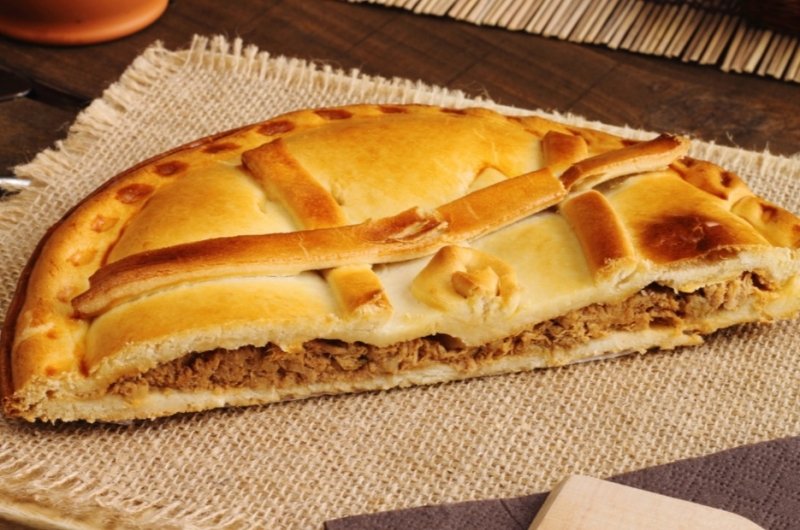
Empanada gallega (Galician pie)
This pie can be filled with different stuffings: tuna, scallops, mussels, meat, and other fillings, often with a lot of onion!
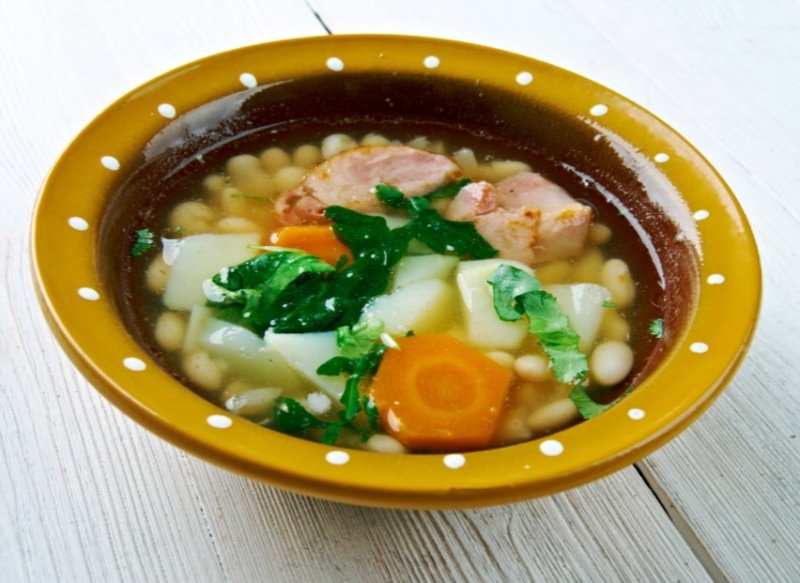
Caldo gallego (Galician soup)
It’s very common to see the “Caldo Gallego” as a starter on a Pilgrim Menu. This soup contains “grelos” (turnip greens), beans, and lacón (cured pork shoulder).
Tarta de Santiago (Santiago cake)
A moist almond cake, usually dusted with icing sugar around the shape of the cross of St James. For breakfast or as a dessert… any time is perfect to try some Tarta de Santiago.

Pulpo a la gallega (Galician octopus)
Tender octopus, sliced and served on a wooden plate with olive oil, sea salt, and paprika. On the Camino Francés, the town of Melide is famous for it, and a pulpería (octopus restaurant) is the place to try it.
Pimientos de Padrón (Padrón peppers)
Small green peppers fried in olive oil and sprinkled with salt. They grow from May to October and take their name from Padrón on the Camino Portugués. Their appearance on menus varies by restaurant and time of year. Most are mild, but every so often you will bite into a hot one, which is half the fun.
Eating with Dietary Needs
Galician cooking leans on meat, fish, and seafood, so vegetarians, vegans, and people with allergies need to plan a little more, especially in small villages. A few phrases help: sin carne (without meat), sin pescado (without fish), and sin gluten (gluten-free). Larger towns and Santiago have more choice.
Tell us about your dietary requirements when you book. For allergies, confirm ingredients and possible cross-contact directly with each venue, as a translated phrase alone cannot guarantee a dish is safe. Bring suitable snacks in case your choices are limited.