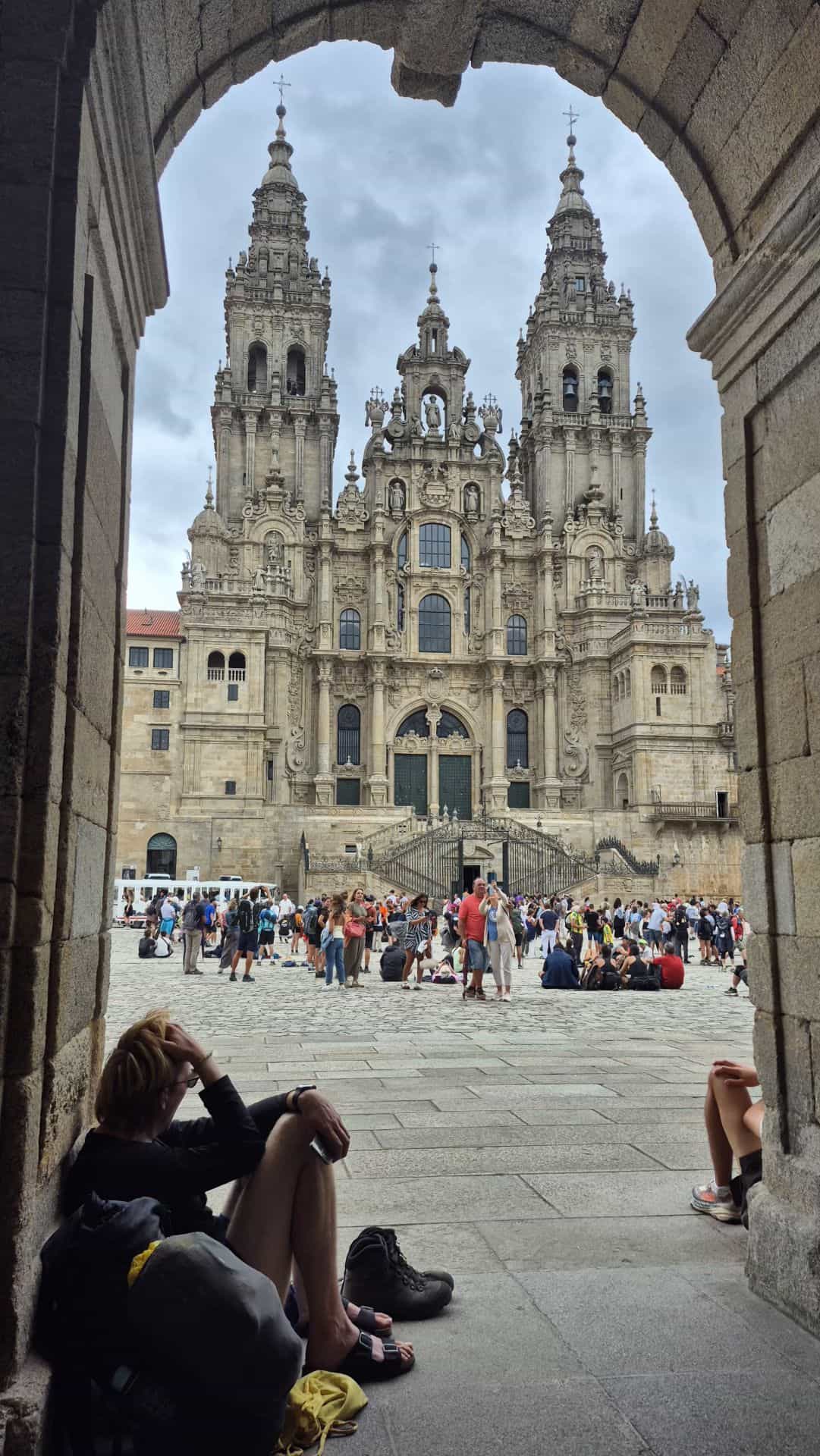
A typical day on the Camino follows a steady rhythm: breakfast, an early start, several hours of walking, regular food and water stops, then time to rest and enjoy your destination.
U Walk makes this routine easier because we arrange your hotel, breakfast, and daily luggage transfer, leaving you free to focus on the walk.
In this article:
- Early starts help you avoid the strongest afternoon heat and give you more time to settle into your next hotel.
- Your day bag should carry water, snacks, and a light layer while your main luggage moves ahead.
- Café stops, bocadillos, and pilgrim menus keep meals simple and practical throughout the day.
- Evenings leave time for laundry, sightseeing, socialising, and recovery before the next stage.
For those choosing to walk the Camino de Santiago, whether in its entirety or smaller sections, you will often find yourself following a rough pattern day after day. That’s not to say that every day is exactly the same, but the nature of walking the Camino means you tend to follow a determined routine and an approximate schedule.
It’s important to remember that everybody walks their own Camino. Some choose speed as a determining factor, while others actively seek out the slower way of doing things and choose to meander sedately while taking in their surroundings. There’s no right way or wrong way to walk the Camino de Santiago.
Each Camino is unique, which is part of its appeal. It can still help to see what a normal day on the road might look like. The following is not necessarily set in stone but is meant as a rough blueprint of a typical day on the Camino de Santiago.
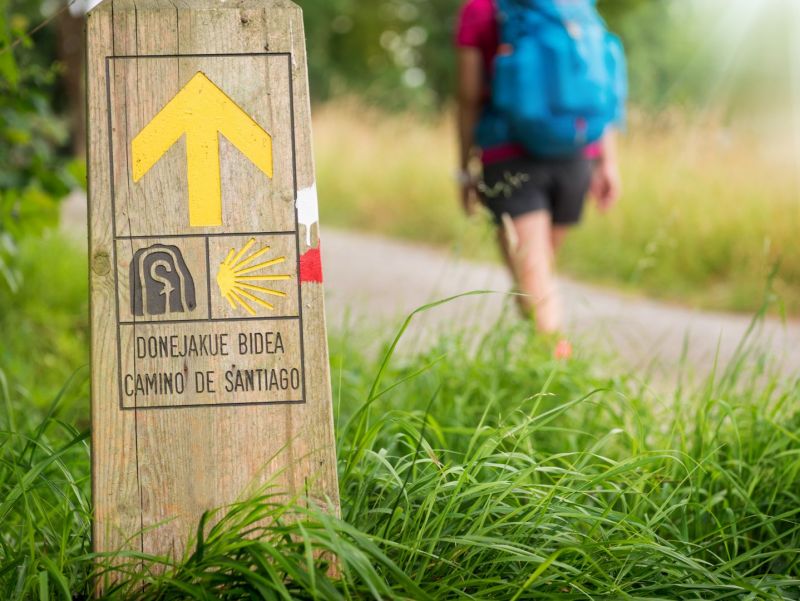
How Does a Typical Camino Day Begin?
Early starts are common on the Camino because they help you avoid the hottest part of the day and reach your next hotel with time to settle in.
Starting early can also mean quieter paths during busy periods.
Our guide to staying hydrated on the Camino explains how much water to carry and where to refill.
Pack Your Day Bag
An early start gives you more time to walk before the afternoon heat. Pack water, snacks, and a light layer in your day bag, then leave your main luggage for our daily transfer to your next hotel.
Breakfast is included at your hotel each morning, so you can fuel up before you start walking. Options vary between hotels but may include toast, pastries, fruit, yoghurt, and coffee. You can stop for another coffee or a light snack later in the morning.
Morning
Once you’re out on the Camino, you begin the time-honoured tradition of placing one foot in front of another for several hours to reach your next destination.
A Mid-Morning Café Stop
A mid-morning café stop might include a café con leche, toast with tomato and olive oil, a pastry, or fresh orange juice. Many cafés also serve tortilla de patatas. For more ideas on what to order, read our guide to food along the Camino, including popular Spanish and Galician dishes.
If you prefer to keep walking, carry a banana, tangerines, or an energy bar near the top of your day bag.
While some try to stick to a daily schedule, it’s often best to just go with the flow because you never really know what you’re going to find along the Way. Perhaps a shaded restaurant takes your fancy, and you decide to stop for an ice-cold Coke or ice cream. Maybe the look of a nearby chapel just off the Camino catches your eye, and you spend a happy half an hour exploring its quiet interior.
Then again, maybe you just want to plod along slowly while bonding with your newly acquired best friend whom you’ve just met, while taking in your glorious surroundings.

Lunchtime
Depending on where you are, lunch on the Camino can vary hugely. If you happen to be passing through a town or city, you might stop at a restaurant for a proper sit-down meal to give you that much-needed calorie boost after the morning’s exploits. Just bear in mind that lunch in Spain usually isn’t until 1 or 2 pm, so turning up ravenous to a restaurant at midday might leave you disappointed.
Bocadillos and Café Stops
For many walkers, lunch is a good old-fashioned bocadillo, an enormous Spanish sandwich served from one of the many affordable cafés along the way.
Don’t expect anything too complicated, with cheese and chorizo the most popular choices, but for just a few euros, they are an excellent cost-effective choice.
Once you’ve wiped away the last of those crumbs, it’s time to saddle up and hit the road once again.

Afternoon
In many ways, an afternoon on the Camino is exactly the same as the morning, though often with higher temperatures, which makes planning ahead important.
Most stages on the Camino are between 20 km and 30 km with a clear, set destination in mind. Walking 20 km often takes around 4 to 6 hours, depending on your pace, the terrain, and the number of breaks you take.
Arriving at Your Destination
When you arrive at your destination, you will typically check into your accommodation, and it goes without saying that a nice hot shower after 6 hours of walking feels superb.
Once you’ve freshened up and washed the grime of the road away, it’s time to see the sights, and in some places, the term ‘sights’ can be used liberally.
If you happen to be in a city or town, late afternoons and early evenings are wonderful periods to casually stroll through the old streets and to soak up the atmosphere of small places that you would never normally get to see if you weren’t walking slowly across Spain.
If your stage ends in Santiago, our guide to places to visit in Santiago de Compostela will help you plan the afternoon.
In small rural locations, where getting anywhere will require much more walking, people tend to congregate in small cafés or bars in the village for a few pre-dinner drinks.
Laundry, Rest, and Exploring
Some take this time to wash a few clothes by hand, use a washing machine or dryer if their accommodation provides one, and leave their shoes to air out, while more than a few will curl up in bed for a well-deserved nap.
Dry socks and well-aired shoes help reduce friction. Read our guide to avoiding blisters on the Camino for practical prevention and treatment tips.
Evening
Evenings can be a wonderful time on the Camino de Santiago, as groups gather in small squares to tell their war stories involving blisters, broken backpacks and wrong directions. Apart from the actual walking itself, it’s here that you get the wonderful sense of camaraderie between walkers and the social aspect shouldn’t be overlooked.
Shared meals and busy squares are part of the Camino’s social side. Our guide to Camino etiquette and traditions explains the simple customs that help everyone feel comfortable.
Pilgrim Menus
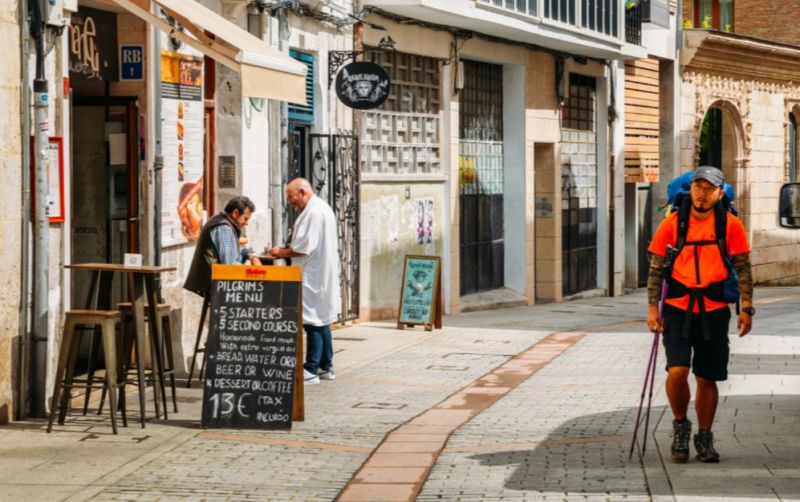
Many restaurants offer a menú del peregrino, or pilgrim menu, in the evening. It is usually sold at a fixed price and often includes a starter, main course, dessert, and a drink, making it a practical way to refuel after walking.
A generous evening meal, perhaps accompanied by a glass of wine, is a satisfying way to end the day. There’s something liberating about being able to eat whatever you like because you know the very next day you will once again be rising around sunrise to do it all again.
Your choice of evening activity will often depend on where you are and, of course, how tired you are at the end of the day. The cities offer plenty to do in the evening, but many walkers keep things quiet and head to bed by 10 pm. After all, it’s another big day tomorrow.

Explore our Camino walking tours to compare the Camino Frances, Camino Portugues, and Celtic Camino.