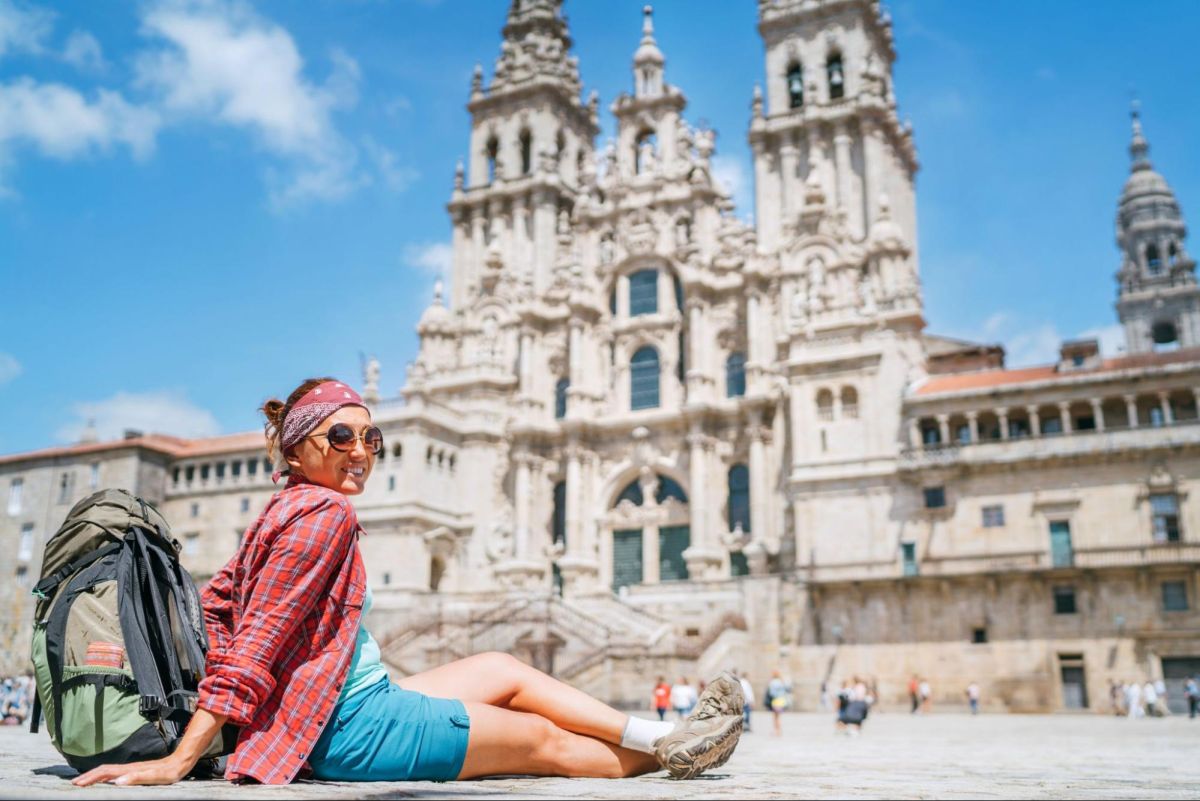
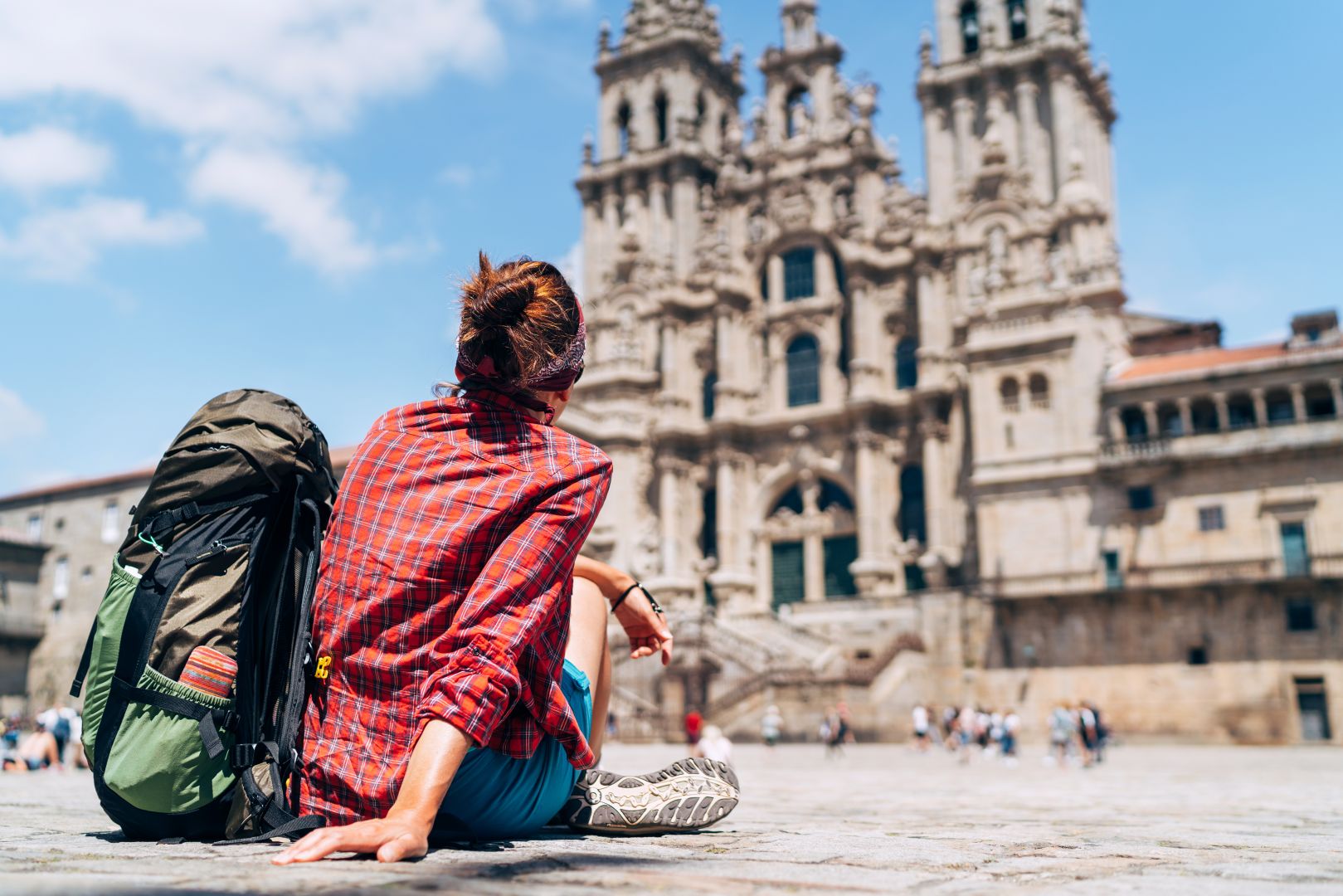
The Cathedral of Santiago de Compostela is one of the world’s most significant religious and cultural landmarks. Located in the Galicia region of northwestern Spain, it serves as the final destination for the Camino de Santiago – the Holy Grail that people spend weeks, sometimes even months, walking towards.
With its rich history and stunning architecture, this majestic cathedral symbolises faith, endurance, and devotion for millions of pilgrims and visitors annually. It’s so much more than just a building.

Historical Background
The history of the Cathedral of Santiago de Compostela dates back to the early 9th century when the tomb of the Apostle Saint James, one of Jesus Christ’s closest disciples, was purportedly discovered in this region.
According to legend, a hermit named Pelagius was guided by a star to the site of the tomb, leading to the establishment of Santiago de Compostela as a significant Christian pilgrimage destination. The name “Compostela” is believed to be derived from the Latin phrase “Campus Stellae,” meaning “Field of the Star.”
Construction of the first church on the site began in 829 AD under the orders of King Alfonso II of Asturias. This early church was modest, but the growing number of pilgrims necessitated the construction of a larger, more magnificent structure.
The current Romanesque cathedral was built between 1075 and 1211 AD under the initial direction of Bishop Diego Peláez and consecrated in 1211. Over the centuries, it has undergone numerous expansions and renovations, incorporating Gothic, Baroque, and Renaissance elements, resulting in today’s stunning architectural masterpiece.
The Camino de Santiago
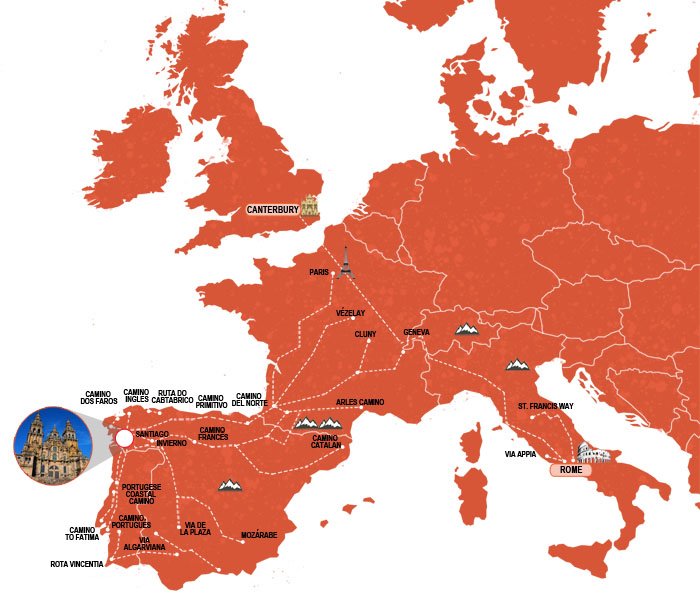
Of course, if you’re reading this, you’ll probably already know about this magnificent structure’s relationship to the Camino de Santiago or the Way of St James, which ends at the Cathedral of Santiago de Compostela.
Millions of pilgrims have travelled these routes, which traverse various European countries since the Middle Ages. The most popular route is the Camino Francés, which starts in Saint-Jean-Pied-de-Port in France and covers approximately 800 kilometres to Santiago de Compostela.
Pilgrims embark on the Camino de Santiago for various reasons, including religious devotion, personal reflection, adventure, and cultural exploration. The journey is marked by a sense of camaraderie among pilgrims, who often share stories, meals, and experiences along the way.
The pilgrimage culminates at the Cathedral of Santiago de Compostela, where pilgrims traditionally attend the Pilgrim Mass and receive their Compostela, a certificate of completion. If you’re doing the Camino with Uwalk, Santiago lies at the end of the Final Stage – a glorious ending to a cherished pilgrimage.

Holy Years and the Pilgrim Mass
Holy Years, also known as Jacobean Years, are special jubilees that occur whenever the Feast of Saint James (July 25) falls on a Sunday. During a Holy Year, the Holy Door (Porta Santa) of the cathedral is opened, allowing pilgrims to enter through this special, usually sealed entrance.
Holy Years are significant because they traditionally offer pilgrims the opportunity to receive a plenary indulgence, which is forgiving all temporal punishment due to sin. The number of pilgrims on the Camino de Santiago has always risen dramatically during these years, sometimes almost doubling, with the next scheduled Holy Year in 2027.
The Pilgrim Mass is a daily celebration held at the Cathedral of Santiago de Compostela to welcome and bless the arriving pilgrims. This special Mass usually takes place at noon. It is often accompanied by the swinging of the legendary botafumeiro, a giant incense burner that is one of the cathedral’s most iconic features. The Pilgrim Mass is a time for reflection, gratitude, and spiritual fulfilment as pilgrims give thanks for completing their journey and seek blessings for the future.
The Botafumeiro
The botafumeiro is one of the most distinctive and memorable aspects of the Cathedral of Santiago de Compostela. This giant thurible, which weighs about 80 kilograms and measures 1.5 metres in height, is suspended from the cathedral’s ceiling and swings across the transept during certain religious services, particularly the Pilgrim Mass. The botafumeiro is filled with charcoal and incense, producing clouds of fragrant smoke as it swings.
The tradition of the botafumeiro dates back to the Middle Ages. One practical reason for its use was to mask the smell of the tired and often unwashed pilgrims who had travelled long distances to reach the cathedral. Today, the botafumeiro is a powerful symbol of prayer and purification, and witnessing its majestic swing is a highlight for many visitors and pilgrims.
Due to cost, the swinging of the botafumeiro usually now only happens on Sundays unless you are willing to pay €450.
Inside the Cathedral

The Portico of Glory
As you enter the cathedral, one of the first awe-inspiring sights is the Portico of Glory (Pórtico da Gloria). This stunning Romanesque masterpiece, created by Master Mateo in the 12th century, serves as the main entrance to the cathedral’s nave. The portico features intricate sculptures of biblical figures, including Christ in Majesty, surrounded by the Apostles, angels, and saints. Pilgrims traditionally place their hands on the Tree of Jesse, a central column in the portico, as a gesture of reverence.
The High Altar
The high altar, located at the heart of the cathedral, is a dazzling spectacle of Baroque art. The altar is adorned with gold, silver, and precious stones, creating a breathtaking focal point. Above the altar, you will find the Saint James the Greater statue, depicted as a pilgrim. Pilgrims often climb the steps behind the altar to hug the statue of Saint James, a tradition symbolising their arrival and gratitude for a safe journey.
The Crypt of Saint James
Beneath the high altar lies the crypt of Saint James, where the apostle’s relics are kept. The crypt is a place of profound spiritual significance, and many pilgrims visit it to offer prayers and reflect on their journey. The silver reliquary containing Saint James’s remains is a focal point of devotion and reverence within the cathedral.
The Royal Pantheon
The Royal Pantheon, located in the cathedral’s transept, houses the tombs of several Galician kings and queens. This serene and historical space offers a glimpse into the region’s royal heritage and close ties to the cathedral.
The Cloister
The Gothic cloister of the cathedral is another architectural gem worth exploring. The cloister offers a peaceful retreat, with beautifully carved arches and columns and a garden inviting quiet reflection.
The Pilgrim’s Office and the Compostela
Upon completing their pilgrimage, many pilgrims visit the Pilgrim’s Office (Oficina del Peregrino) to receive their Compostela. The Compostela is a certificate that verifies the completion of the Camino de Santiago, granted to those who have walked at least the last 100 kilometres or cycled at least the last 200 kilometres to Santiago de Compostela. The certificate is in Latin and includes the pilgrim’s name and completion date.
The Pilgrim’s Office is located near the cathedral and serves as a place for pilgrims to officially register their journey, receive their Compostela, and share their experiences. Pilgrims must present their credentials with a pilgrim’s passport stamped along the route to document their progress. The credential serves as proof of the journey and the effort invested in completing the pilgrimage.
The End of the Journey
The Cathedral of Santiago de Compostela is a testament to the enduring power of faith, tradition, and human perseverance. Its rich history, architectural splendour, and deep connection to the Camino de Santiago make it a mighty symbol of spiritual and cultural significance.
For centuries, pilgrims from all walks of life have journeyed to this sacred site, drawn by the promise of spiritual renewal, personal transformation, and a profound sense of accomplishment. Whether you’re on the Camino Frances or Camino Portugues, this hallowed site, steeped in history and devotion, remains a hugely important destination for hundreds of thousands each year.